
The First 90 Days Decide Whether Banking Succeeds or Stalls In modern retail banking, the first 90 days determine whether a new card or account customer becomes an active, profitable user — or disappears into inactivity after initial excitement. This phase, known internationally as EMOB – Early Months on Books, is central to lifecycle frameworks

Within the Customer Lifecycle Management (CLM) of banks, the question is no longer what is communicated – but how. While many institutions still rely heavily on email as their primary customer communication channel, real-world behavior tells a very different story: each generation interacts with banks through different channels, with different expectations and levels of tolerance.

The industry talks about personalization – but usually means segmentation For years, personalization has been one of the most frequently used terms in insurance marketing. In practice, it often translates into finer target groups, more segments, and better clusters. What the market expects today is something fundamentally different. Not better-defined audiences, but relevance at the

In many markets, the credit card business has reached a point of saturation. The number of issued cards continues to grow, but the real growth potential no longer lies in issuing more cards. It lies in how actively those cards are used. For credit card issuers, competitive advantage today is no longer defined by reach,

Banks have invested heavily in digital transformation. Yet one of the most powerful personalization assets is often underutilized: transaction data. Every bank account transaction, every credit card payment and every merchant category provides direct insight into customer behavior, needs and life situations. From Raw Transactions to Transaction Intelligence Transaction data is not just accounting information.

Artificial Intelligence is no longer a future promise in banking — it is ready for production. Yet many institutions remain stuck between pilot projects and real-world deployment. The reason is rarely technology. It is security, compliance, and governance. While GenAI and Agentic AI offer massive efficiency gains, banks hesitate because the regulatory framework feels unclear

Hardly any boardroom discussion in banking today takes place without mentioning artificial intelligence. Expectations are high: more efficient processes, better customer experiences, smarter decisions. But how far along are banks really? And where does the gap between ambition and execution lie? A look at the recent Cofinpro study “AI in Banking” reveals: the potential is
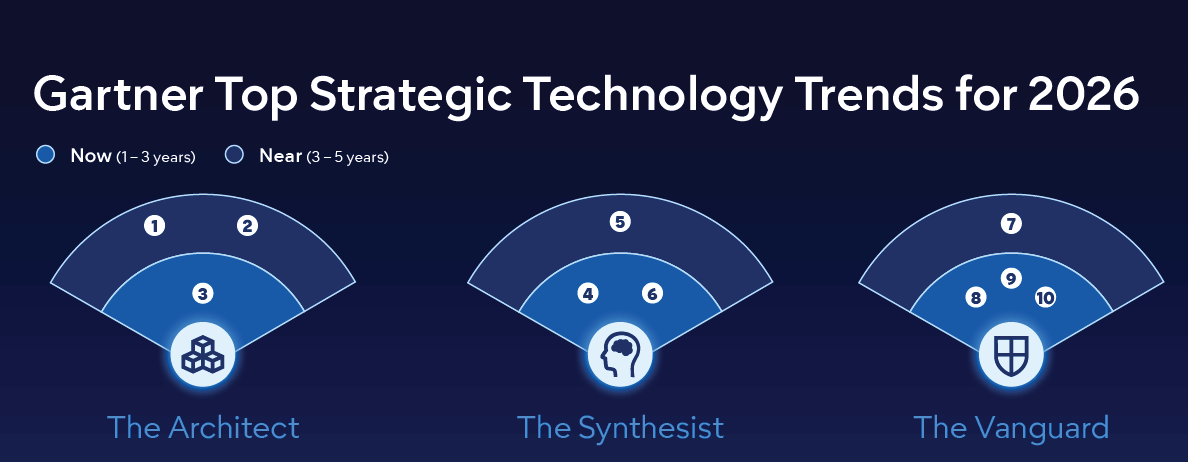
By Michael Altendorf, CEO of Acceleraid. Gartner has released its list of the top 10 technology trends for 2026. For many organizations, terms such as Multi-agent Systems or Confidential Computing still sound like a distant future. At Acceleraid, they are already part of our daily operations. Gartner’s predictions can be structured into three strategic pillars:

Artificial intelligence is no longer a future topic for banks and insurance companies. Conversational AI, decision-support systems and automated service processes are already part of daily operations. Yet adoption at scale often stalls at executive level. The reason is rarely performance. It is trust. Black-box AI systems produce results without clearly explaining how those results

The banking industry is undergoing a fundamental transformation. Customers today expect personalized digital experiences — the kind they encounter with leading tech companies. At the same time, banks face increasing pressure: competition from fintechs and neobanks, declining loyalty, and rising acquisition costs. Predictive AI provides the answer by enabling precise Churn Prediction and Next Best Product recommendations. In this environment, traditional